
The United States and Canada enjoyed a boom economy in 1926, with the expansion of the middle class and a rising of the working class. Baseball, then established as America’s Pastime, was in prime position to take advantage of that economic expansion — and the result was a boom in MiLB ballparks.
While Major League ballparks were firmly in place by 1926—the majors would not see a new facility until 1932, and that happened only on a situational basis in Cleveland—the same was not true in the minors. The National Association claimed 254 teams in 32 different leagues at five levels, and in this era before the creation of modern farm systems, owners operated with a high level of autonomy and functioned under league rules, not centralized MLB guidelines.
The booming economy and the freewheeling nature of pro baseball led to an unprecedented expansion of new ballparks, many of which are still standing and used by pro and summer-collegiate teams—or even by MLS teams. In this series, we’ll run through the major facilities opening in 1926, highlight their use as pro venues, and catch you up on how they’re still hosting fans.

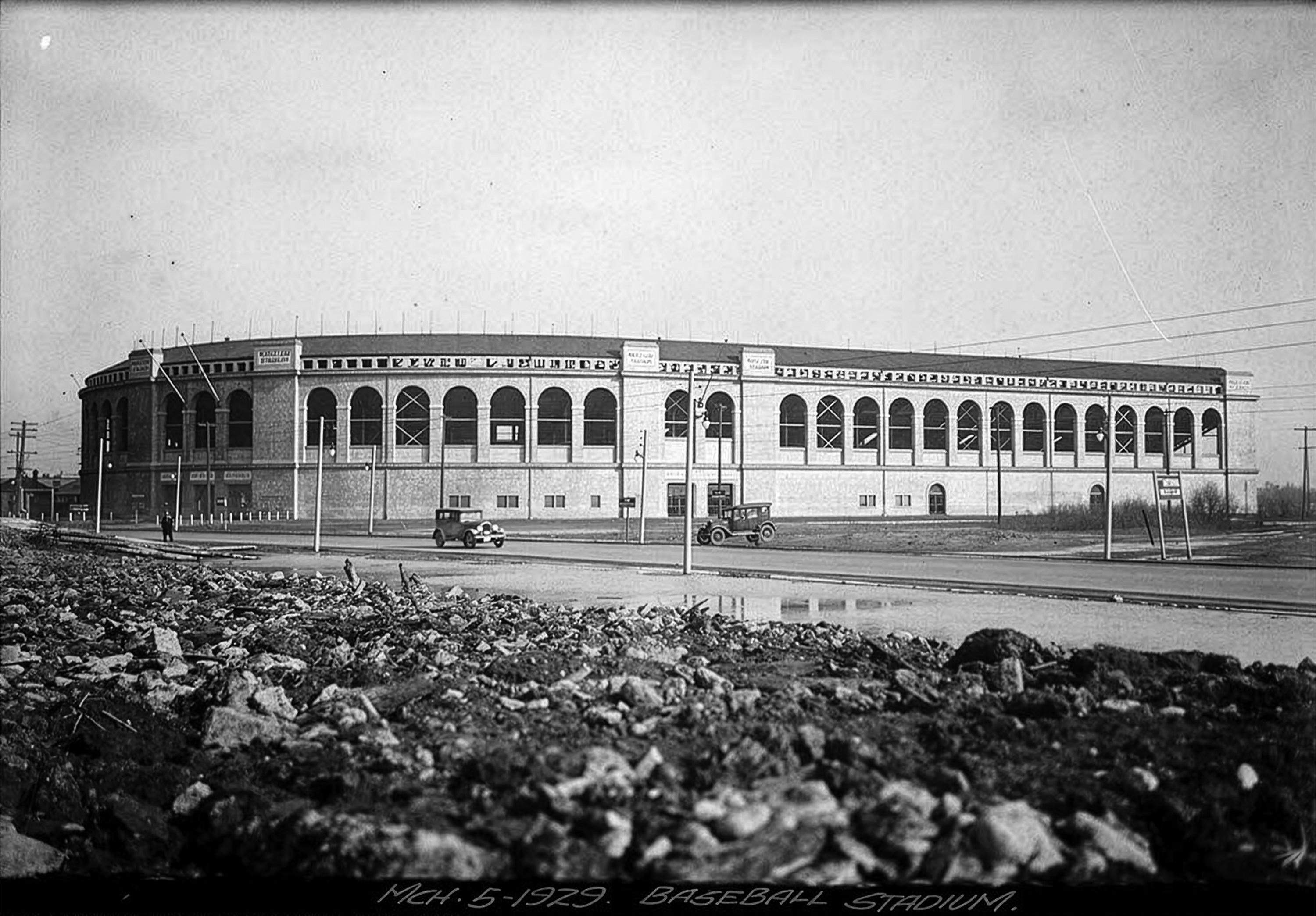
We’ll begin with perhaps the most notable new ballpark opening in 1926: Maple Leaf Stadium, home of the Toronto Maple Leafs. The International League team had been playing at an island amusement park, Hanlan’s Point, off and on since 1897. The fate of the Maple Leafs was tied to the ferryboat company that built the ballpark and eventually owned the Leafs. Built three ballparks, actually; two were destroyed by fire (a common fate in the era), with the final version seating 17,000 (shown above).
At the time Toronto was a baseball hotbed experiencing an economic boom, says author D.M. Fox in his engaging The Howleyites: Toronto’s Changing City, A Stadium Rising, and The Champions of 1926 (yes, from August Publications) Toronto was an international city on the rise in 1926, as Canada was starting to flex its muscles on the world stage diplomatically and economically. The country was making advances in medicine, literature, academia, the arts, and technology, and nowhere was this more evident than in Toronto. By virtue of its central location, the city was becoming a major manufacturing, financial, and transportation hub.
Prosperity also created demand for leisure offerings, and baseball was one of the top entertainment draws of the era. While the final Hanlan’s Point ballpark attracted large crowds, fans weren’t necessarily happy with the experience: the island location required ferry access as well as a game ticket, and it could take hours to exit Hanlan’s Point following a game.
Entrepreneur Lol Solman, Toronto’s “King of Weekends” as a former manager of the ballpark, hotel and amusement park, assumed the presidency of the Maple Leafs and began plans for a more accessible ballpark near public transit and eliminating the need for a ferry ride. After several rounds of negotiations with the city, a plan emerged for a new ballpark on the city parkland built atop reclaimed shoreline. From Fox’s The Howleyites:
Solman had initially commissioned noted Toronto architectural firm Chapman and Oxley to build a 35,000-seat stadium with a covered grandstand from the left-field to right-field foul poles. But with costs for the concrete and steel structure (creating a fire-resistant facility, unlike its predecessors on the Island) spiraling, the seating was cut back to 20,000….Plans were quickly made to host football (both the Canadian and American versions) and lacrosse games, high-school sports, concerts, and even boxing matches. The sparkling new park, completed in just five months, offered a view of the Lake Ontario waterfront, but that reduced capacity would come back to haunt future owners of the club with dreams of luring a struggling existing MLB franchise to the city.
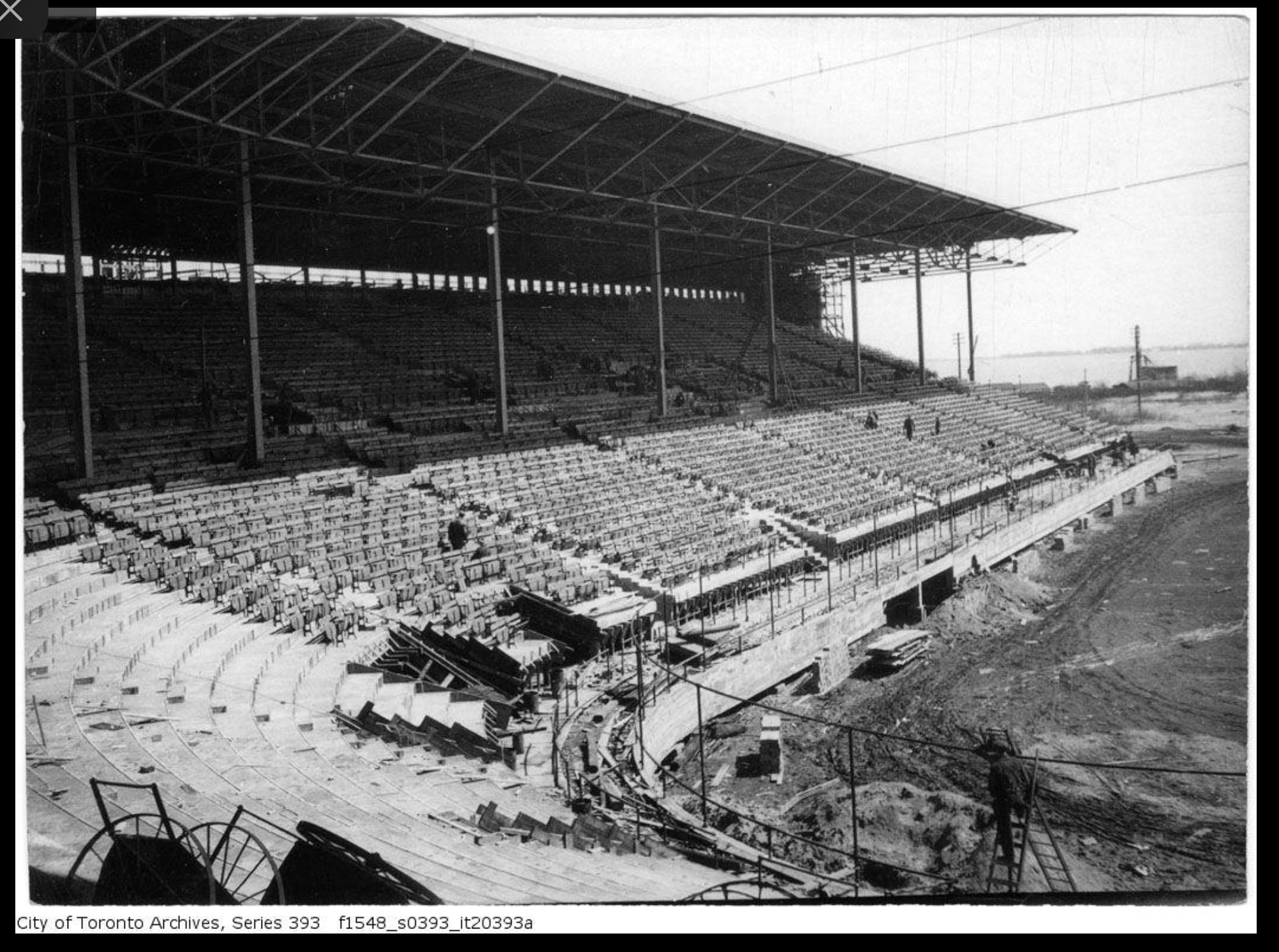
The new Maple Leaf Stadium opened to wide acclaim on April 29, 1926. MLB Commissioner Judge Kennesaw Mountain Landis was among the dignitaries was on hand, per The Howleyites: Landis…examined the stadium from head to toe, “even going to centre field to inspect the flag mast,” which stood in play in front of the outfield wall, according to the Globe. Landis examined the club’s offices, Solman and Howley’s offices, clubhouses and umpires’ rooms, heating and lighting systems, and even the restaurant and lunch counter. “Absolutely nothing overlooked or forgotten,” the Globe reported. “As near perfection as possible to have a baseball park.”
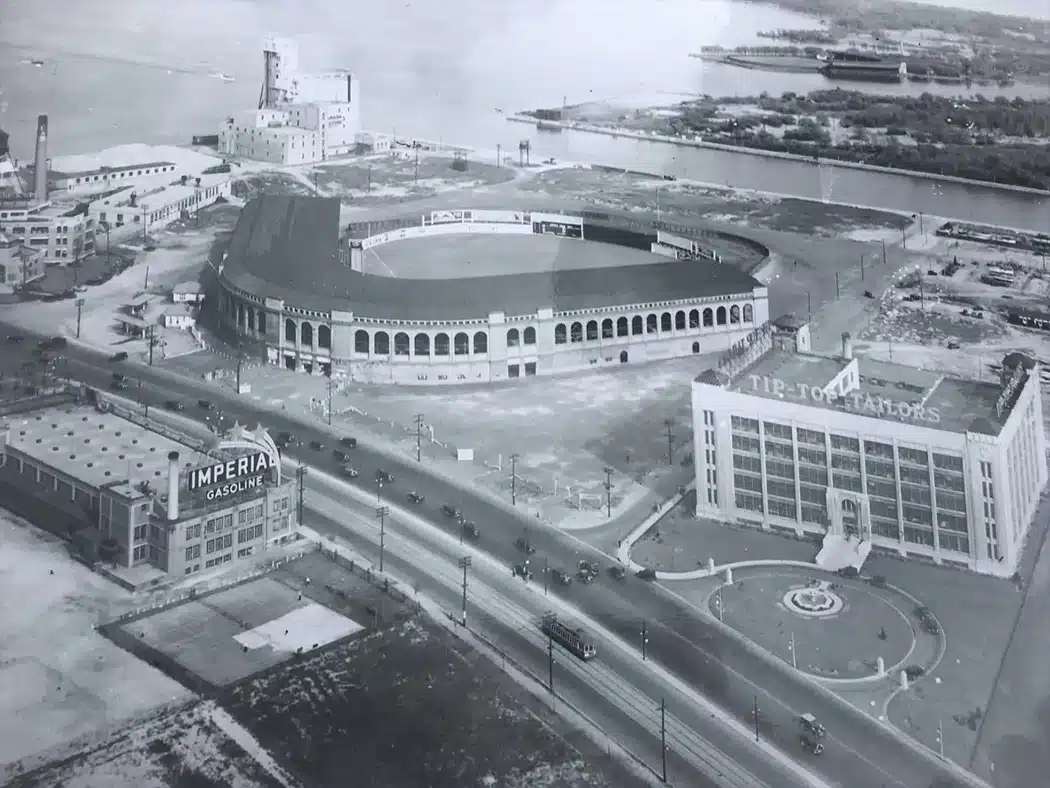
While Landis did not endorse the notion of an MLB team setting up shop at Maple Leaf Stadium, he didn’t discourage the notion, either. (Indeed, the lure of Major League Baseball was strong in Toronto; Solman had explored a purchase of the Boston Red Sox in 1922, but the lack of a suitable ballpark killed that effort.) Years later Maple Leafs owner Jack Kent Cooke (below), the radio entrepreneur who later made his name as a team owner in the NFL, NBA and NHL, stressed the temporary use of Maple Leaf Stadium as a selling point as he sought major league teams—notably, the Boston Braves and Philadelphia Athletics—for possible relocation, while targeting the startup Continental League as well.
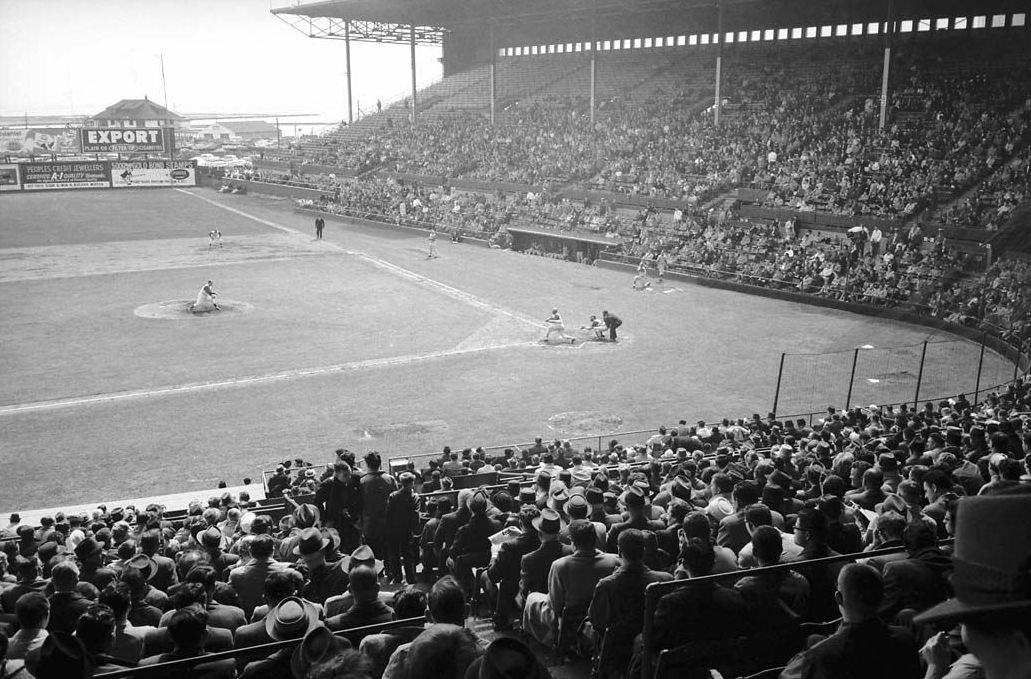
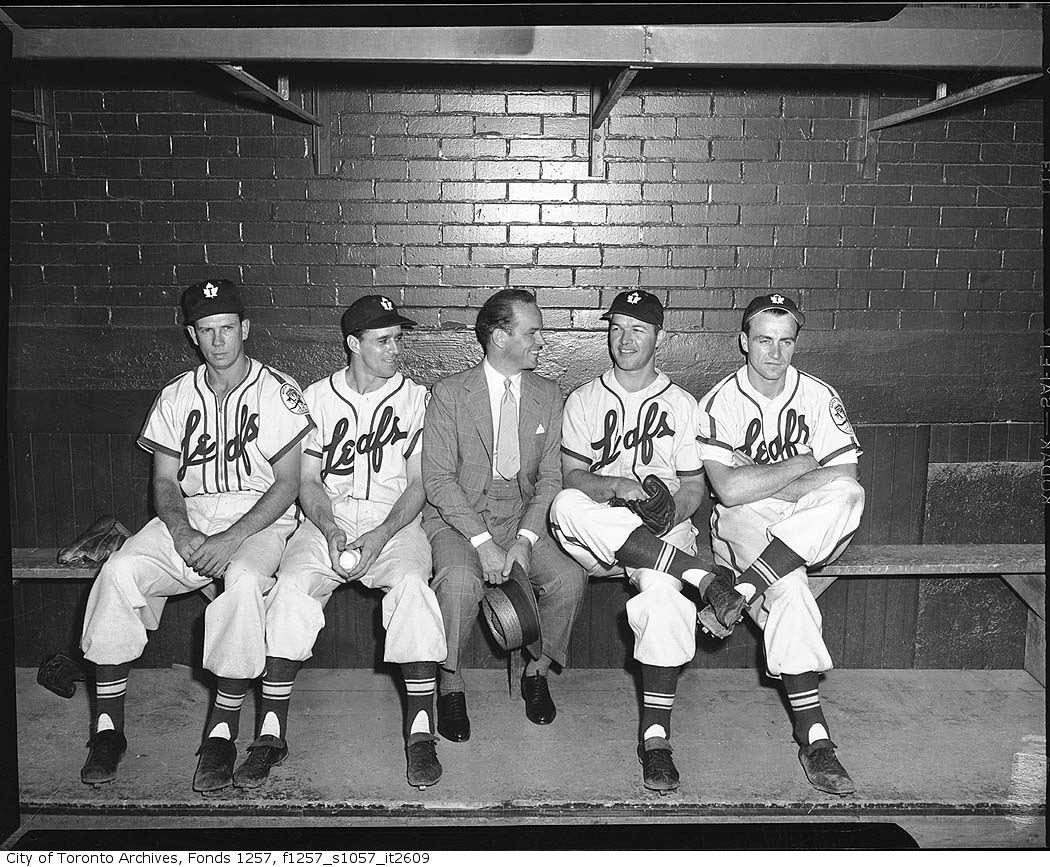
That first year saw a boost in Maple Leafs attendance, but perhaps not to the level envisioned by Solman, and the combination of construction overages and the Great Depression impacted both the team and the ballpark. Still, 1926 represents a banner year in Maple Leafs history: a win in the Junior World Series against the Louisville Colonels, the city’s only such title in the MiLB Modern Era.
By the late 1950s, Maple Leaf Stadium was regarded as one of the worst in Minor League Baseball, as years of deferred maintenance had caught up to what debuted as the best ballpark in MiLB. The Maple Leafs limped to a final season before the International League franchise was sold to Louisville interests and the ballpark torn down. Per The Howleyites: “The former Maple Leaf Stadium grounds today host a small ballpark, playground, and a townhouse development. A commemorative plaque, placed in 2019 just steps from where home plate once sat, celebrates the stadium and Toronto’s baseball history.”
All images via City of Toronto Archives.
Next in our series of ballparks marking a centennial in 2026: Madison’s Breese Stevens Field.