
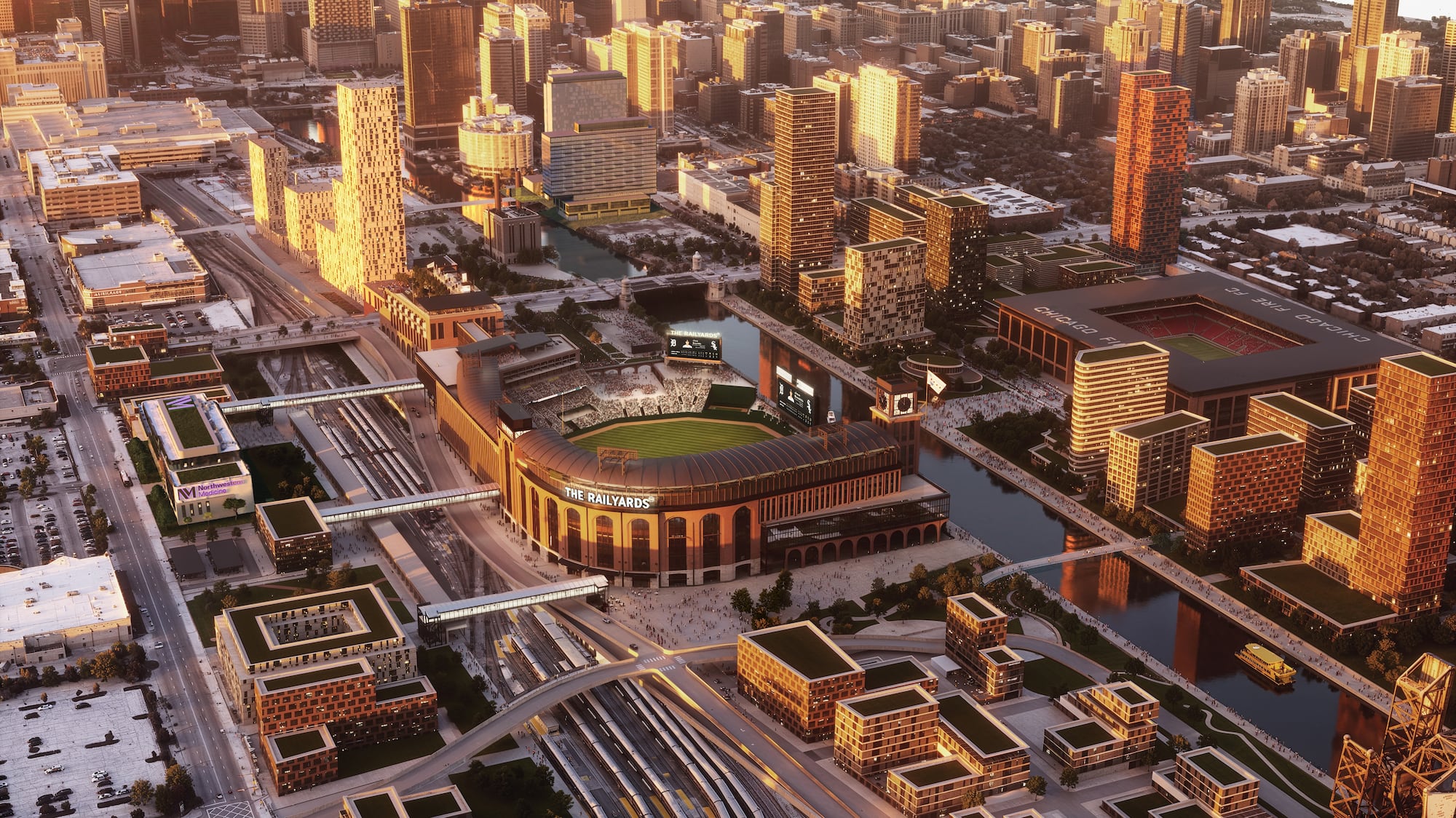
With a plan for a development along the South Branch of the Chicago River, Justin Ishbia is unveiling yet another vision for a new White Sox stadium—but a lot needs to happen before we see any kind of groundbreaking.
The plan calls for an 80-acre mixed-use district, The Railyards, in the South Loop, across the Chicago River from the new MLS stadium under construction on a site once pitched as a future home for the White Sox. The new site, which could contain a new Northwestern Medicine healthcare facility, is currently home to an Amtrak and BNSF switching yard, which would be relocated to the Rate Field site once the White Sox depart for the South Loop. Ishbia’s Shore Capital Partners was under contract to acquire the 47-acre 14th Street Coach Yard site.
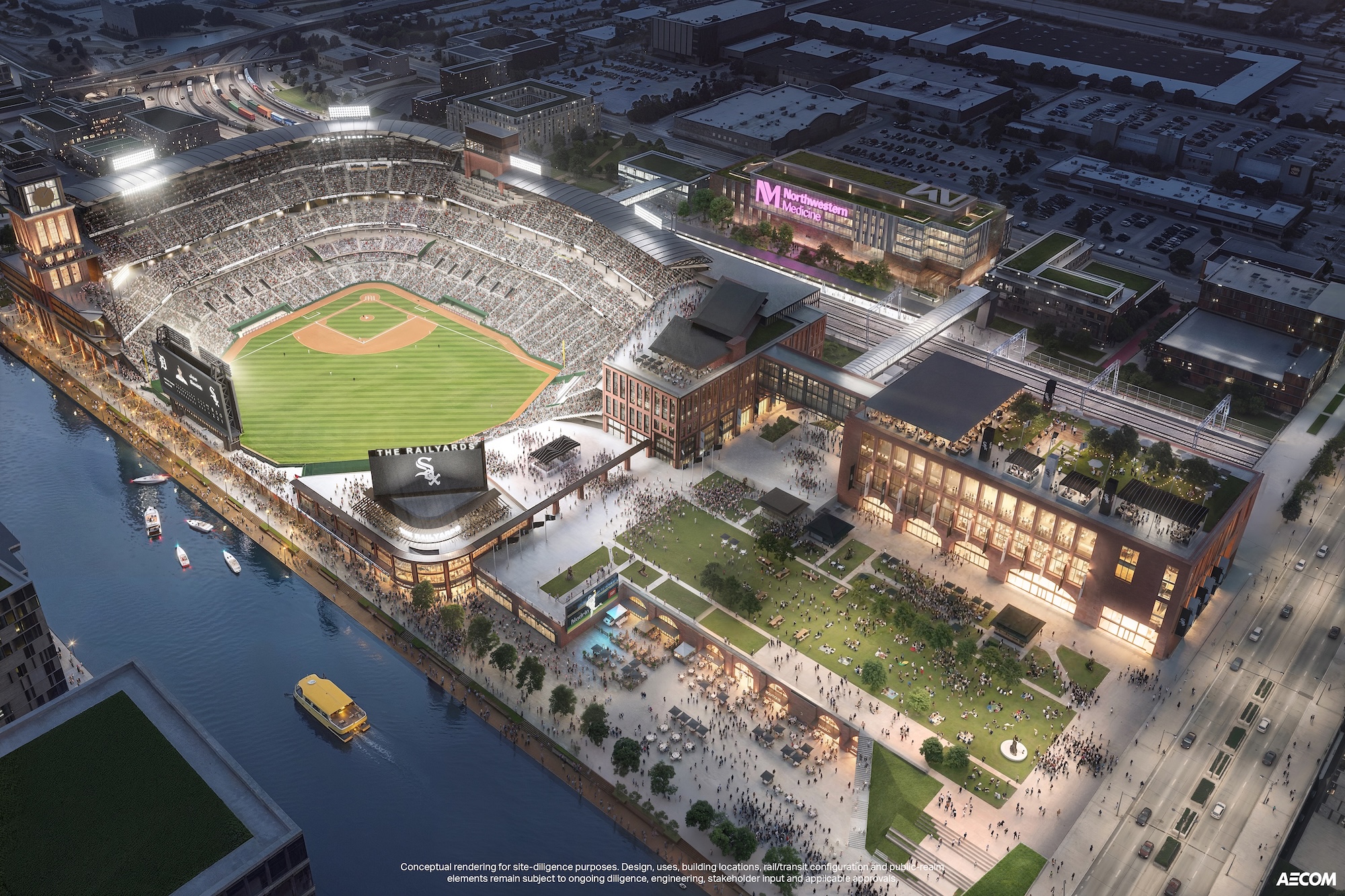
Repurposing the 14th Street Coach Yard isn’t new: Amtrak has pitched this in the past, and it’s generated plenty of opposition in the Bridgeport neighborhood, who don’t want to see Rate Field replaced by an expanded rail yard. But a move of the Coach Yard does open up 80 acres of prime real estate in the South Loop, combining a new ChiSox ballpark development to the new MLS stadium and its accompanying development. The White Sox’s lease at Rate Field with the Illinois Sports Facilities Authority ends in 2029, when the final bonds issued for ballpark renovations are scheduled to be retired. But the proposal also calls for a rather tricky timeline: Ishbia is just a minority owner of the White Sox at this time, and his purchase agreement with Jerry Reinsdorf isn’t set to close until 2034—but it could also close as early as 2029, as that year triggers an option controlled by Reinsdorf to sell the team. Ishbia’s own option to buy the team starts in 2034.
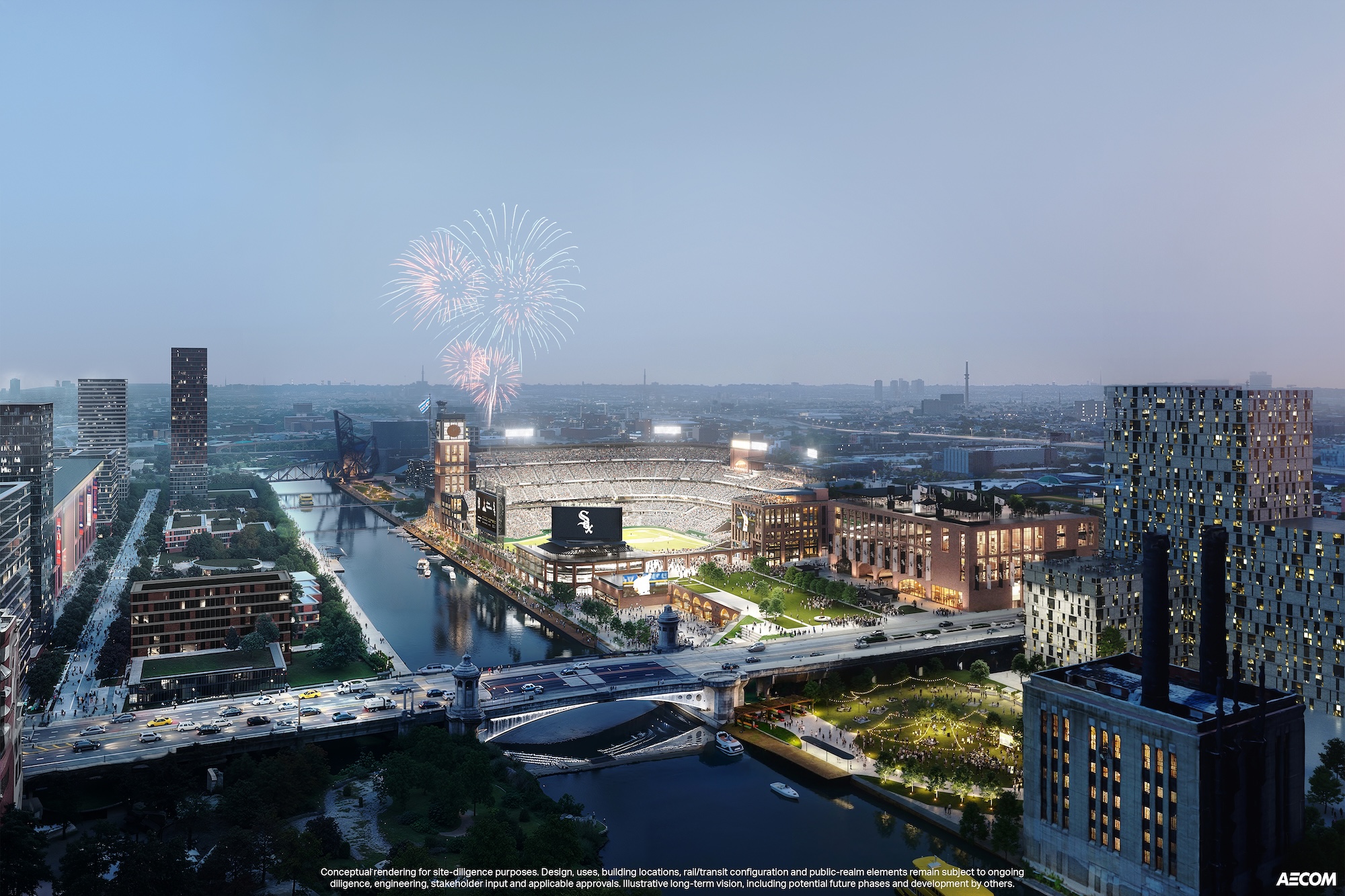
As noted, there are plenty of moving pieces in this plan, with most of it privately financed by Ishbia, though we are likely to see some calls for public spending on infrastructure, including a new Amtrak station. Ishbia is conducting focus group meetings to gauge reactions to the plan. The new White Sox ballpark, based on conceptual drawings from AECOM, would feature a retro design and an exterior with tall, arched windows reminiscent of the old Comiskey Park exterior.
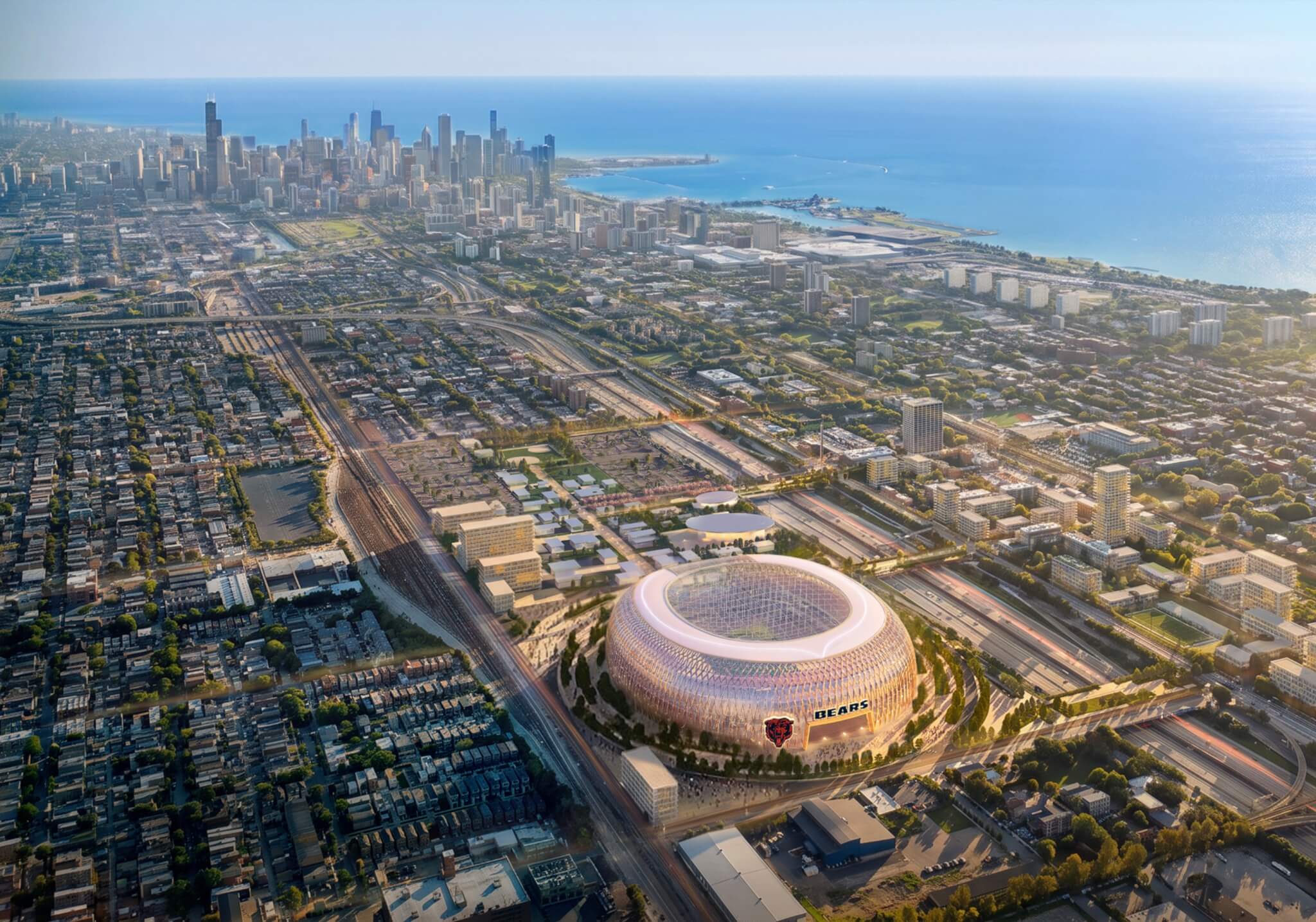
There has a genuinely perplexing twist in this whole saga: the White Sox ballpark site has been pitched by architecture giant Skidmore, Owings & Merrill as the potential site for a new Chicago Bears stadium and associated development (rendering above and below). Now, the Rate Field has been in play to a certain extent once the White Sox indicated a new ballpark was in the team’s future: MLS’s Chicago Fire once floated a plan to take over the site with a new soccer stadium and a mixed-use development, a plan scrapped when team owner Joe Mansueto turned his attention to the South Loop location and development, The 78, where a new stadium is currently under construction. And, of course, the Sox’s plans for a new ballpark depend on Amtrak relocating rail lines to the Rate Field site—a prospect not exactly embraced by locals.
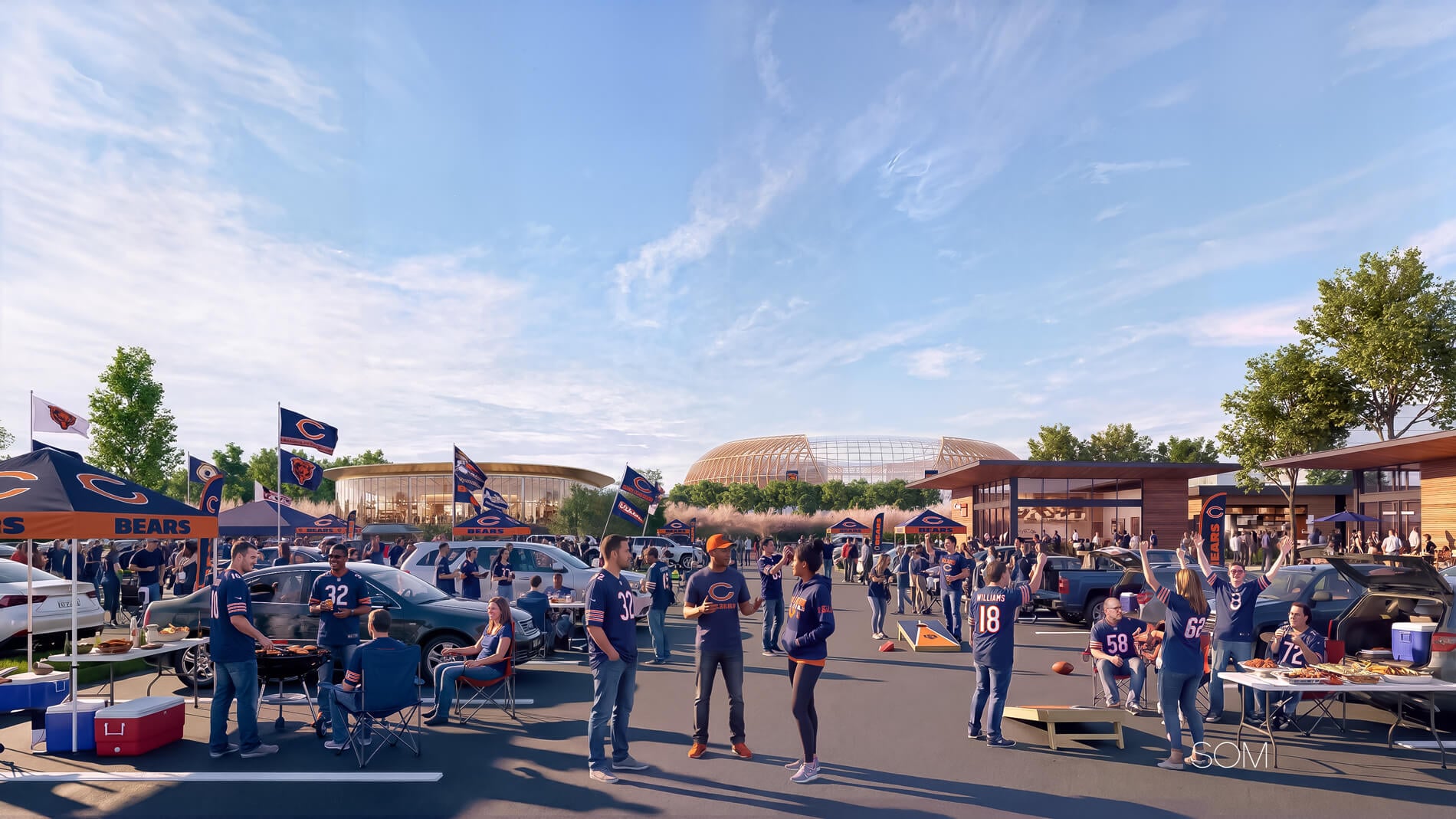
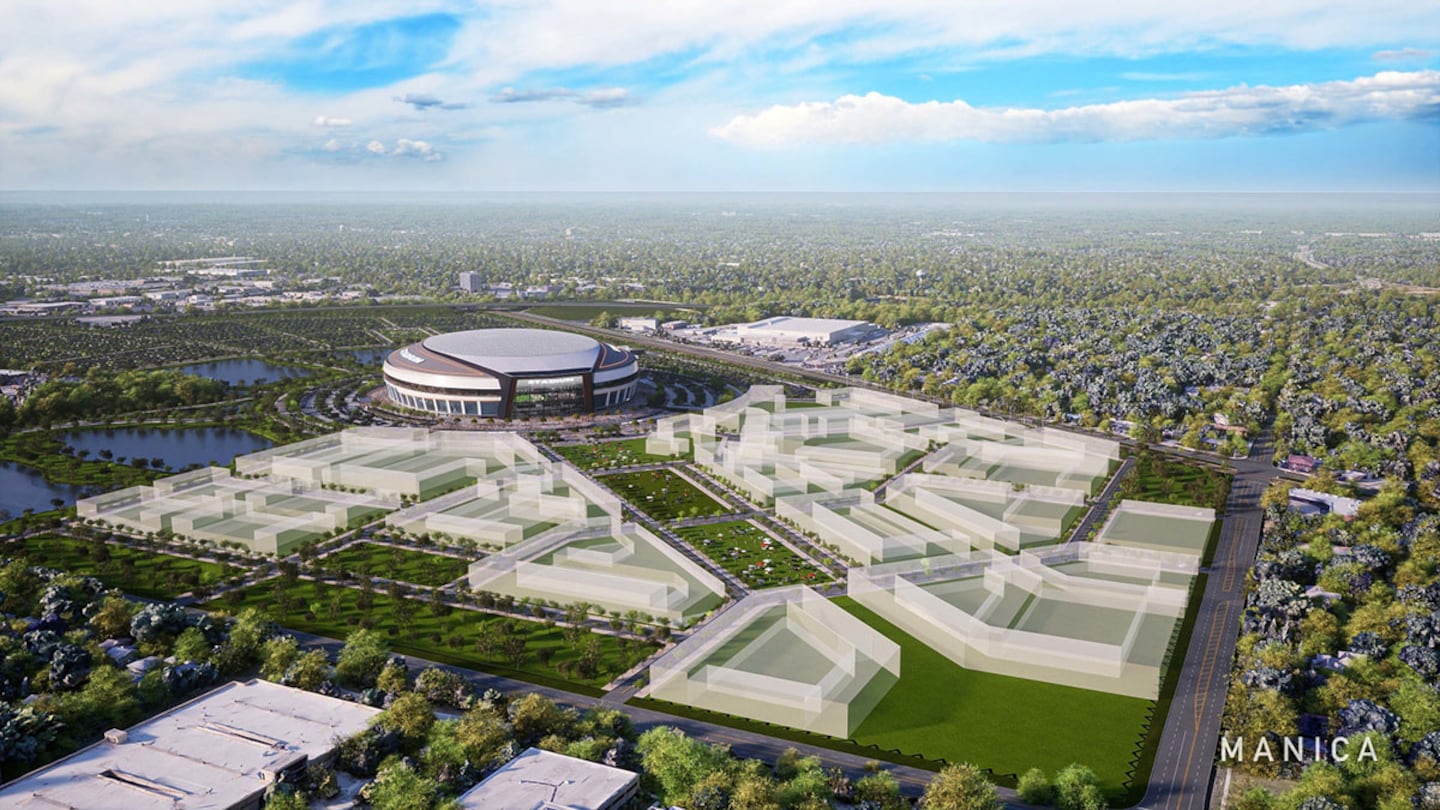
The Skidmore, Owings & Merrill plan calls for a new Bears stadium on the larger Rate Field site, encompassing new development there as well as across the Dan Ryan Expressway on publicly owned land in Bronzeville. It would keep the Bears in Chicago proper, coming after the team floated potential new stadiums in a suburban Arlington Heights location and across state lines in Hammond, Indiana. Though it at one point looked like a move to Indiana was a done deal, state officials have been discussing a plan for the Arlington Heights site; it’s the former Arlington International Racecourse racetrack location now owned by the Bears, who pitched a mixed-use development anchored by a new stadium, team museum and more (Manica renderings below).
The Bears have had the luxury of taking their time floating new stadium plans: their Soldier Field lease doesn’t end until 2033.
Now, what’s perplexing is that the advantages sited by SOM—location, location, location—would obviously benefit the White Sox in a new ballpark quest as well. And the SOM plan calls for ever more parking for the stadium, compete with room for tailgating. Indeed, with the ballpark served by CTA, Metra, and Dan Ryan Expressway, it’s a very accessible site for fans. We’re not going to issue a full-throated defense of Rate Field—it was the last MLB ballpark built before Oriole Park changed facility design forever, and its many shortcomings can’t be addressed by renovations—but no one seems to be discussing constructing a new mixed-use development there. The former location of Comiskey Park is just north of Rate Field and serves mainly as Lot B, so building a new ballpark there (in some version of poetic justice) while the ChiSox play out the string at Rate Field, tearing it down when a new ballpark opens, should be considered as a viable alternative.
Renderings of new White Sox ballpark proposal courtesy AECOM; rendering of proposed Chicago Bears stadium in Arlington Heights courtesy Manica; renderings of proposed Chicago Bears stadium in Bridgeport courtesy SOM.
RELATED STORIES: Report: Reinsdorf to seek $1B in state money for new Chicago White Sox ballpark; Plans for new Chicago White Sox ballpark unveiled